Send Voting Toolkits to Schools
Oct. 21, 2026
Text copied from Zinn Education Project website – Here is a way we can all help to get voting information out in the classroom. Maybe not in time for the midterms in two weeks, but this project sounds like a practical step to take right now.
Voting Rights Teaching Toolkits Reaching Classrooms Across the Country
Thanks to donations, we are sending Voting Rights Teaching Toolkits to teachers. These toolkits help young people see voting as part of a broader effort to improve their lives and communities — and to see themselves as agents of change rather than spectators to politics.
 jehrenhalt10
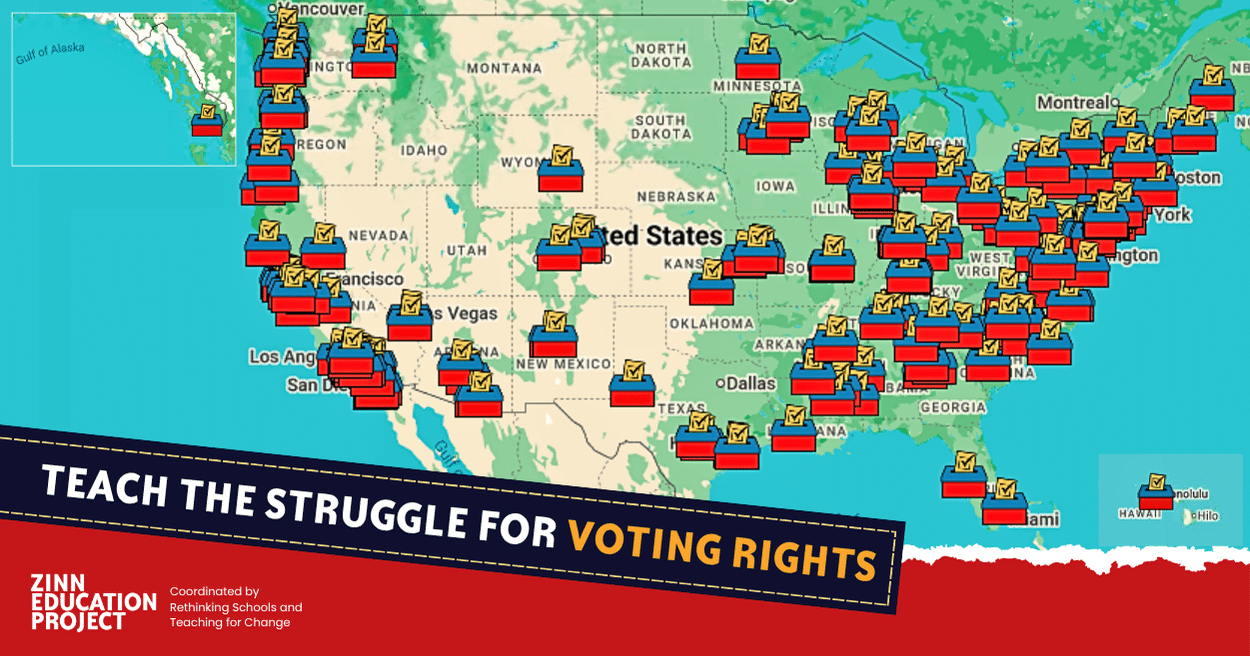
Teachers around the country are requesting our Voting Rights Teaching Toolkit to help young people see voting as part of a broader effort to improve their lives and communities — and to see themselves as agents of change rather than spectators to politics. The National Education Association printed the lessons, voting rights organizations provided additional resources, and individual donors are contributing to the cost of postage.
Our goal is to send at least 500 toolkits and reach all 50 states and territories. Your donation can make that possible.
Each request for a toolkit includes a note about how or why the educator plans to teach about voting rights from September through the election. Here are a few responses:
Social Studies Teacher in North Carolina:
My goal is for my students to be informed, involved members of society, and consider how to have a meaningful social impact. This includes being informed about the pitfalls and shortcomings of this country, such as the fact that the Constitution was not designed with all in mind, and voting rights have been, and continue to be undermined. This feels particularly important considering that I teach in the South, and that voting rights are being actively threatened here. — high school social studies teacher, Durham, North Carolina
Special Ed Teacher in Alaska:
Locally, our borough assembly is anti-education and has been withholding funds leading to massive teacher layoffs in our district. I’ve already started working with NEA Campaign Lab to elect pro-public education candidates and improve the public perception of education in Ketchikan, Alaska. We need to teach our students early about the importance of voting and educating yourself on the platforms of candidates and choosing the issues that matter most to you. — middle school special education teacher, Ketchikan, Alaska
Other Teacher comments:
The families of English learners are really struggling right now with their rights, given ICE activity in our area. I would like to emphasize what is supposed to happen in a democracy, and the history of how we formed our government and democratic norms. — Elementary ESL teacher, Sharon, Massachusetts
I want students to leave these lessons with a stronger understanding of the Constitution, the rights and responsibilities of citizenship, how elections and government institutions work, and how to distinguish credible information from misinformation or partisan persuasion. — middle and high school social studies teacher, Cass Lake, Minnesota
Many of my students, as well as their parents, live in poverty and also are illiterate. They rely heavily on community resources to survive. Being informed and able to vote would be very relevant to these families and my students. — teacher educator, Richmondville, New York
This is important because voter registration is down in our community, and I want to inspire them to become active voters while they are enthusiastic about the process. — High school social studies teacher, Nashville, Tennessee
My aim is to help students move beyond passive citizenship and recognize the power of their voices. ... Studying people who created change within their own communities can help students see themselves as participants in democracy. — High school history teacher, Camden, Mississippi
I want students to learn that voting is a right that many people gave their blood, sweat, and tears to earn and how we should honor their legacy through civic engagement. I want them to understand that they are an important part of upholding our multiracial democracy and be aware of the attacks on voting rights in recent years. — high school social studies teacher, Clayton, North Carolina
I teach AP Government and look forward to having more materials to reinforce the need to vote, the importance of helping everyone get to the booth, and on the challenges many citizens experience just trying to get their vote count. — high school social studies teacher, Fulshear, Texas
Our students don’t see the point in voting; they don’t think they can make a difference. Through these lessons, we’re hoping to show them that they can make a positive difference, especially in local elections and the school governing board, as those are effects they can see more easily. Especially as our community is rocked by immigration raids, the attack on bilingual education, and the school to prison pipeline. — high school social studies teacher, Tucson, Arizona
I want my students to be more critical in their thinking about elections and understand that even though it is not a presidential election, this election is just as if not more important. I teach in a battleground state and county. As such we are inundated with misinformation and barriers to voting that my students need knowledge to help fight. — high school history teacher, Middletown, Pennsylvania
These midterm elections are a pivotal moment for the United States. They will determine whether any semblance of checks and balances will survive. It is important to me that students are primed and ready to understand the mechanics of the elections and the consequences of the results. I also want students to feel empowered that they can impact the results of an election, even when they may be too young to vote. — high school history teacher, Seattle, Washington
Each box includes:
- “Who Gets to Vote? Teaching About the Struggle for Voting Rights in the United States” 3-lesson unit
- “We the People” Constitution lesson
- Constitution Gallery Walk
- SNCC Legacy Project Voting Rights and Interpretive Booklet
- Teach Banned History button
- Teach Reconstruction Campaign postcard
- “Teach. Vote. Resist. Organize” poster
- “We the People By the People” poster from the NEA
- Social Justice Books list on voting rights for grades pre-K–12
- Resources from ACLU, NAACP Legal Defense Fund, Taskforce for Democracy, and more
We need your help to send more voting rights teaching toolkits. Donate today to provide young people with the tools to defend voting rights.
Text above taken from The Zinn Education Project.
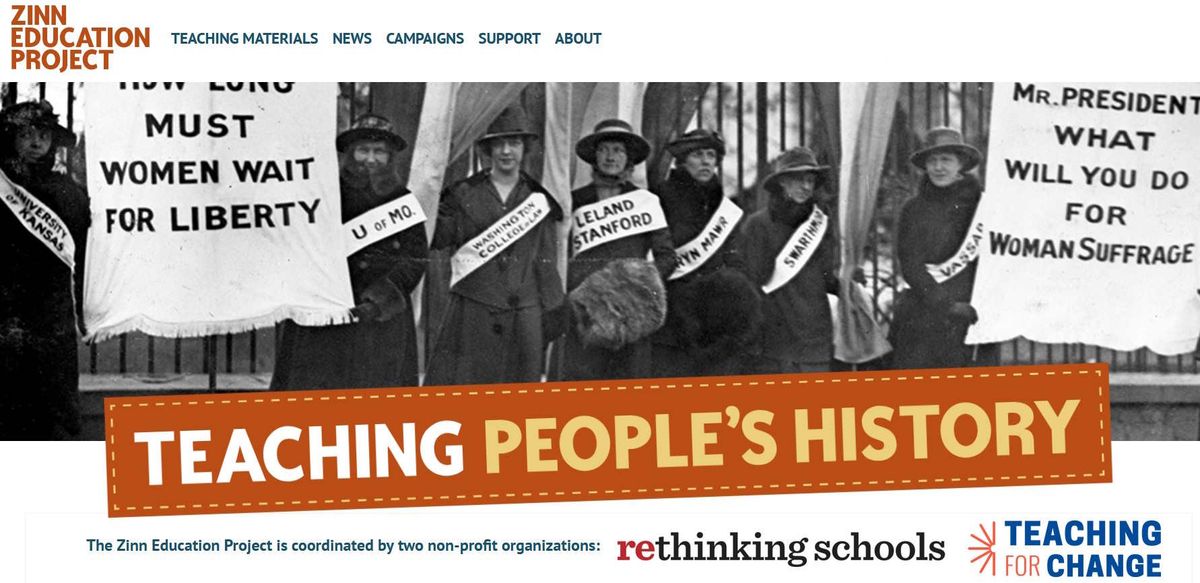
Zinn Education Project: Teaching People's History
The Zinn Education Project promotes and supports the teaching of people’s history in middle and high school classrooms across the country. Based on the lens of history highlighted in Howard Zinn’s best-selling book A People’s History of the United States, the website offers free, downloadable lessons and articles organized by theme, time period, and reading level.

Call to Action: Teach Voting Rights in an Age of Authoritarianism
from this Zinn Project article:
We are witnessing a vicious attack on voting rights, democratic participation, and truthful education. History reminds us that we must organize to protect the gains won through generations of struggle. We can help young people see voting as part of a broader effort to improve their lives and communities, and see themselves as agents of change rather than spectators to politics.